
Postural Dysfunction: Is Bad Posture Really the Cause of Your Pain?
Written by Connor Sheeks PT, DPT · Published June 2026 · Last reviewed June 2026
Reading time: approximately 9 minutes
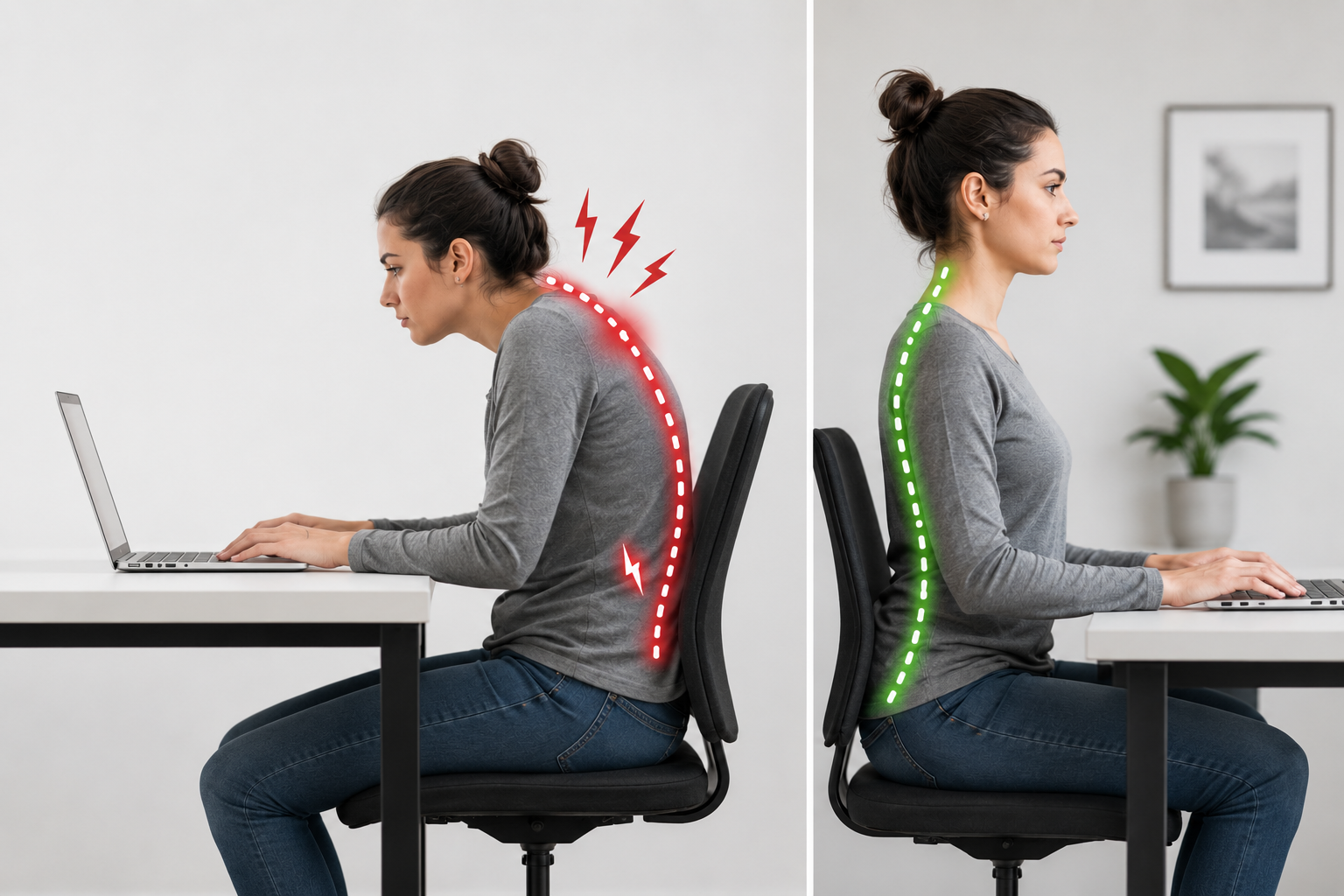
You have probably been told your posture is the problem. A doctor glancing at how you sit. A chiropractor showing you an X-ray of your neck. A colleague telling you to sit up straight. Bad posture causes back pain, neck pain, headaches. Fix your posture, fix your pain.
Here is the more accurate version: posture matters, but not the way you have been told. The relationship between posture and pain is not about whether your alignment is perfect in a snapshot. It is about whether your tissues can tolerate the loads your posture places on them, for how long, and whether you are moving enough throughout your day to prevent those loads from accumulating beyond what your body can handle.
That distinction changes everything about how postural dysfunction is best treated. And it explains why years of trying to sit up straight has not resolved most people's pain.
This article is an honest look at what the research actually shows, where the conventional posture-pain model gets it right, where it oversimplifies, and what effective rehabilitation for postural dysfunction actually targets.
What you will learn in this article
• What postural dysfunction actually means clinically
• Why the posture-pain relationship is more conditional than most patients are told
• The specific postural patterns that do have a strong relationship with particular diagnoses
• Why posture matters as a loading pattern, not a static position
• What actually drives postural pain and what changes outcomes
• What an effective rehabilitation program targets
• How telehealth PT addresses postural dysfunction
What Postural Dysfunction Actually Means
Postural dysfunction is not a single diagnosis. It is a clinical umbrella term for a pattern of habitual postures, movement habits, and muscle imbalances that place tissues under sustained or repeated mechanical stress beyond their tolerance. The most commonly described patterns include:
Forward head posture: the head sitting forward of the body's center of gravity rather than balanced over the shoulders. Common in people who spend extended time at screens.
Upper crossed syndrome: a pattern of tight upper trapezius, levator scapulae, and pectorals combined with weak deep cervical flexors and lower trapezius. Associated with rounded shoulders and forward head position.
Lower crossed syndrome: a pattern of tight hip flexors and lumbar extensors combined with weak glutes and abdominals. Associated with increased lumbar lordosis and anterior pelvic tilt.
Thoracic kyphosis: excessive rounding of the mid-back, often combined with forward head posture and rounded shoulders.
Flat back posture: reduced lumbar lordosis with a posterior pelvic tilt and flattened thoracic curve.
These patterns are real and clinically measurable. The question worth examining honestly is how and when they produce pain, because the answer is more conditional than the simple narrative most patients receive.
Where the Conventional Model Oversimplifies
Postural measurements and pain correlate less strongly than expected
Multiple large-scale studies have examined the relationship between measured postural deviations and reported pain, and the findings are consistently more nuanced than the posture-first model predicts.
A 2019 systematic review in the Journal of Orthopaedic and Sports Physical Therapy examined forward head posture and neck pain across 26 studies. The result: forward head posture showed a weak and inconsistent association with neck pain overall. Many people with significant forward head posture had no pain. Many people with neck pain had relatively normal head position.
Similar findings exist for lumbar lordosis and low back pain, and thoracic kyphosis and shoulder pain. The correlations exist, but they are not deterministic.
This does not mean posture is irrelevant. It means something more specific: posture in isolation is not the cause of pain. What matters is whether a given postural pattern places a particular tissue under load that exceeds its tolerance, for long enough, in someone whose tissues are not adequately conditioned to handle it.
The key insight from postural research
People with identical postural measurements have vastly different pain experiences. People with near-perfect alignment can have significant pain. People with pronounced postural deviations often have none.
This tells us that posture alone does not explain pain. What matters is the interaction between postural loading patterns, tissue tolerance, movement variability, and individual capacity.
Posture is a loading pattern. Whether it causes pain depends on the tissue, the duration, the load, and the person.
The static posture model is the wrong frame
Most posture-focused advice treats posture as a static position to correct and hold. The research increasingly shows this is the wrong target entirely.
A 2006 study by Lis et al. found that sustained static postures, even comfortable and well-aligned ones, increase spinal tissue load over time through a process called creep, where viscoelastic tissues under sustained deformation gradually lose their load tolerance and become more vulnerable. The problem with sitting at a desk for eight hours is not primarily that you are in the wrong position. It is that you are not moving.
Researchers in this field often describe the best posture as your next posture. Variability and movement volume are more clinically important than achieving and holding a correct position.
Where Posture Does Cause Pain: The Loading Mechanism
None of the above means posture is clinically irrelevant. It means the relationship is conditional, and understanding the conditions clarifies exactly when and why posture produces symptoms.
Posture causes pain when a specific postural pattern places a specific structure under sustained mechanical load that exceeds that structure's tolerance over time. The key variables are the structure involved, the duration of loading, the magnitude of the load, and the capacity of the tissue to handle it.
When those conditions are met, the relationship between posture and pain becomes direct and clinically significant. The research does not tell us that posture is irrelevant. It tells us that a brief snapshot of alignment in isolation is a poor predictor. Cumulative loading patterns in deconditioned tissues over months and years are a much better predictor.
Connecting to cervicogenic headaches
In our article on neck pain and cervicogenic headaches, we described how forward head posture has a well-established mechanical relationship with cervicogenic headache specifically.
This is not a contradiction of the broader posture-pain research. It is exactly what that research predicts. Forward head posture places the upper cervical spine under sustained compressive load and chronically overloads the suboccipital musculature. When that loading pattern is sustained across an eight-hour workday over months or years, in someone whose deep cervical flexors and cervical stabilizers are deconditioned, the specific structures involved are the upper cervical joints and suboccipital muscles, which have a direct neurological connection to headache through the trigeminocervical nucleus.
This is posture causing pain through a specific mechanism in a specific structure with specific tissue tolerance requirements. It is entirely consistent with the research, and it illustrates the correct way to think about postural dysfunction: not as a general causal relationship, but as a conditional one that depends on which tissues are loaded, for how long, and in whom.
Postural Patterns With Well-Established Clinical Relationships
With the loading mechanism in mind, the following postural patterns have specific, well-supported relationships with particular diagnoses. These are not coincidental correlations. They reflect the anatomy of how sustained loading of a specific structure produces a predictable symptom pattern.
Forward head posture and cervicogenic headache. Every inch the head translates forward from neutral increases the effective compressive load on the upper cervical spine significantly. Sustained suboccipital overload in a person with deconditioned deep cervical flexors produces exactly the upper cervical joint dysfunction that generates cervicogenic headache through the trigeminocervical pathway.
Anterior pelvic tilt and facet or foraminal pain. Sustained anterior pelvic tilt increases lumbar extension and compressive load on the posterior lumbar elements, including the facet joints and foraminal openings. In someone with existing foraminal narrowing or facet joint sensitivity, this postural pattern is a meaningful pain driver.
Thoracic kyphosis and cervical overload. Loss of thoracic extension mobility forces the cervical spine into compensatory extension to maintain horizontal gaze. This places the mid and lower cervical segments under increased compressive and shear load, contributing to cervical pain and upper extremity symptoms in some presentations.
Sustained asymmetrical sitting and discogenic pain. Habitual asymmetrical sitting positions create asymmetrical intradiscal pressure patterns. In individuals with disc sensitization, this sustained asymmetrical loading can be a meaningful contributor to pain.
The common thread: these are not cases of poor alignment causing pain in a mechanically normal spine. They are cases of sustained loading of a specific vulnerable structure in a person whose tissue tolerance is insufficient for that load. The treatment target is the tissue tolerance, not just the postural angle.
What Actually Drives Postural Pain
When we look at what the evidence identifies as the primary drivers of pain in postural dysfunction presentations, several factors emerge consistently:
Tissue deconditioning. Reduced capacity of the postural stabilizing muscles, including the deep cervical flexors, lower trapezius, thoracic extensors, deep lumbar stabilizers, and gluteal muscles, means that routine postural demands exceed tissue tolerance more readily. The same postural pattern that is inconsequential in a well-conditioned person becomes a genuine pain driver in someone with significant stabilizer weakness.
Movement poverty. The total daily volume of position change and movement is often the primary problem. Sedentary jobs, limited leisure activity, and habitual movement avoidance create tissues that are underloaded, under-recovered, and have a narrow tolerance window.
Cumulative mechanical exposure. Duration matters more than snapshot position. The cumulative mechanical exposure across a full workday and week determines tissue load more reliably than any single postural measurement taken in a clinical setting.
Central sensitization. In chronic presentations, the pain system has often become sensitized to postural inputs that would not normally be threatening, producing pain responses that are disproportionate to the mechanical stimulus. Addressing the sensitization alongside the mechanical drivers is necessary for full recovery.
Breathing pattern dysfunction. Dysfunctional breathing patterns, including accessory muscle dominance and reduced diaphragmatic contribution, are closely linked to postural muscle imbalances and cervical overload. This connection is underappreciated in most postural assessments and is a meaningful treatment target in upper crossed syndrome presentations.
What an Effective Rehabilitation Program Targets
Given this framework, effective rehabilitation for postural dysfunction looks quite different from simply teaching someone to sit up straight. The goal is building the capacity that makes your postural loading patterns less consequential, not correcting your alignment to a theoretical ideal.
Building capacity in the postural stabilizers
The primary exercise priority is developing endurance and neuromuscular precision in the postural stabilizing muscles: deep cervical flexors, lower and middle trapezius, thoracic extensors, serratus anterior, deep lumbar stabilizers, and glutes. These muscles do not need greater maximum force production. They need the sustained activation capacity to support your spine across hours of daily activity without fatigue-driven compensation.
Programs that produce durable results progressively load these muscles over weeks and months in functional movement patterns that transfer to daily activity, not just in isolated clinical exercises.
Thoracic mobility restoration
Thoracic spine restriction is one of the most consistently present and highest-yield findings in postural dysfunction. Reduced thoracic extension and rotation forces compensatory movement into the cervical and lumbar spine, increasing mechanical demand at those regions. Restoring thoracic mobility is an early intervention that reliably reduces cervical and lumbar symptoms in people with postural drivers.
Movement variability throughout the day
A structured approach to increasing position variability is more evidence-supported than optimizing a single static posture. Regular movement breaks, alternating positions where possible, and brief mobility exercises at intervals reduce cumulative tissue load more effectively than any ergonomic adjustment. The target is movement volume, not necessarily perfect ergonomics (although also beneficial).
Breathing pattern retraining
Restoring diaphragmatic breathing reduces accessory muscle overactivity in the cervical and shoulder region that contributes to upper crossed syndrome and cervicogenic headache. It is a low-effort, high-impact intervention that most postural programs overlook entirely and that produces meaningful improvements in cervical stabilizer function.
Pain education and reducing postural anxiety
For patients who have developed significant fear around their posture, direct education about the loading mechanism model is itself a clinical intervention. Understanding that the goal is building tissue tolerance rather than achieving perfect alignment, and that moderate position variation is not structurally threatening, reduces pain vigilance and creates the psychological safety needed to engage with progressive loading.
How Telehealth PT Addresses Postural Dysfunction
Postural dysfunction is one of the conditions where telehealth PT has a genuine clinical advantage in at least one respect: your therapist can see your actual environment.
In a clinic, your PT assesses you in a clinical space on a plinth or a standard chair that has nothing to do with your actual workstation. In a telehealth session at Spine33 Rehab, we assess you at the desk where you spend eight hours a day, in the chair you actually use, with your monitor height and keyboard position visible. That context is clinically valuable in a way that no clinic assessment can replicate.
Beyond the environmental assessment, all of the primary interventions for postural dysfunction are fully deliverable via telehealth: stabilizer strengthening, thoracic mobility work, breathing retraining, movement habit education, and progressive loading programs. There is no component of effective postural rehabilitation that requires hands-on care as a primary tool.
Key Takeaways
• Postural dysfunction is real, but the relationship between posture and pain is conditional, not deterministic
• Posture causes pain when a specific postural loading pattern places a specific tissue under sustained stress beyond its tolerance. Duration, load, tissue capacity, and movement variability are all part of the equation
• Forward head posture has a well-established direct relationship with cervicogenic headache through the trigeminocervical loading mechanism. This is consistent with the broader research, not a contradiction of it
• The problem with poor posture is not the angle. It is the cumulative mechanical exposure in tissues that are insufficiently conditioned to handle it
• Movement variability throughout the day is more important than achieving and holding a perfect static position
• Effective rehabilitation builds tissue capacity, restores thoracic mobility, improves stabilizer endurance, and increases daily movement volume
• Telehealth PT has a genuine advantage for postural dysfunction because your therapist assesses and programs around your actual environment
Frequently Asked Questions
Does bad posture cause back pain?
It depends on the specifics. Postural patterns that sustain load on a particular structure beyond its tissue tolerance, over time, in someone with insufficient conditioning to handle that load, do cause pain. What the research does not support is the simpler idea that any deviation from perfect alignment causes pain. Many people with pronounced postural deviations have no pain at all. What matters is the interaction between loading pattern, duration, tissue capacity, and movement variability.
Why does my neck hurt if my posture is not that bad?
Because postural angle in a snapshot is a poor predictor of pain. What matters more is how long your neck is in that position, how much cumulative daily load is accumulating on those structures, and whether your cervical stabilizers have the endurance to support your head through a full day without fatigue-driven compensation. A relatively modest forward head posture sustained for eight hours a day in someone with weak deep cervical flexors can produce more tissue loading than a more pronounced posture in someone with well-conditioned cervical stabilizers.
Can physical therapy fix bad posture?
Physical therapy can address the underlying drivers: strengthen the stabilizing muscles that provide dynamic postural support, restore thoracic mobility, build movement habits that reduce sustained static loading, and improve neuromuscular control. The goal is not to achieve and hold a corrected position permanently. It is to build sufficient capacity that your natural posture produces less tissue loading and your tolerance for positional variation increases.
Is sitting all day bad for your spine?
Prolonged static sitting is a genuine mechanical exposure that increases spinal tissue load through creep and reduces the movement variability that tissues need for healthy adaptation. The primary problem is not the sitting itself but the absence of position change and movement volume. Regular movement breaks, position variability, and a consistent exercise practice outside of work hours significantly reduce the impact of desk-based work on spinal health.
What is the best posture for sitting at a desk?
The most evidence-supported answer is that there is no single best static position. What is optimal is changing positions regularly, keeping your monitor at eye level to reduce forward head loading, ensuring your chair supports a comfortable range without forcing sustained end-range positions, and taking movement breaks every 30 to 60 minutes. Movement variability is the target, not a single correct sitting posture.
Does a standing desk help with back pain?
A standing desk can help by increasing position variability and reducing total sitting time. The benefit comes from alternating between sitting and standing throughout the day, not from standing for long periods. Standing in poor posture for extended periods creates its own tissue loading problems. Movement variability is the goal, not simply replacing one static position with another.
Been told your posture is the problem? Let us take a real look.
Book a free 15-minute discovery call with us at Spine33 Rehab. We will talk through your history, what you have tried, and whether a telehealth spine rehab program built around movement and load tolerance is the right fit for you.
spine33rehab.com | Book Your Free Call
About the Author
Dr. Connor Sheeks PT, DPT is a licensed physical therapist and the founder of Spine 33 Rehab PLLC, a cash-pay telehealth physical therapy practice specializing in virtual spine rehabilitation. He holds a Doctor of Physical Therapy (DPT) degree and has clinical experience treating chronic low back pain, lumbar disc herniation and radiculopathy, cervicogenic headache, lumbar spinal stenosis, postural dysfunction, and many other spinal pathologies. Spine33 Rehab currently serves patients in Tennessee via telehealth and is actively pursuing licenses in other states.
References
Richards KV, et al. (2016). Neck posture clusters and their association with biopsychosocial factors and neck pain in Australian adolescents. Physical Therapy. doi:10.2522/ptj.20150660
Lis AM, et al. (2007). Association between sitting and occupational LBP. European Spine Journal. doi:10.1007/s00586-006-0143-7
O'Sullivan PB, et al. (2018). Unraveling the complexity of low back pain. Journal of Orthopaedic and Sports Physical Therapy. doi:10.2519/jospt.2018.0609
Falla D, et al. (2007). Effect of neck exercise on sitting posture in patients with chronic neck pain. Physical Therapy. doi:10.2522/ptj.20060009
Bogduk N, Govind J. (2009). Cervicogenic headache: an assessment of the evidence on clinical diagnosis, invasive tests, and treatment. Lancet Neurology. doi:10.1016/S1474-4422(09)70209-1
Damasceno GM, et al. (2018). Text neck and neck pain in 18 to 21 year-old young adults. European Spine Journal. doi:10.1007/s00586-018-5444-2